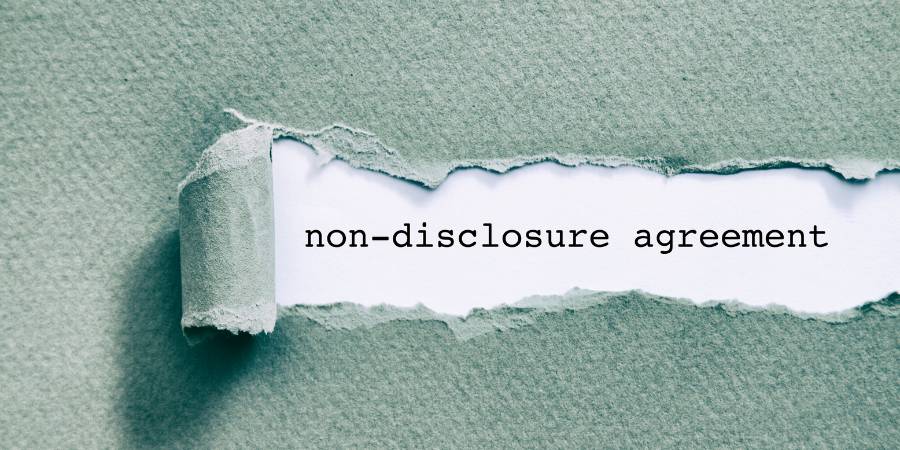
As an attorney with an understanding of intellectual property law, I have witnessed firsthand the importance of safeguarding valuable intellectual assets. In today’s competitive landscape, maintaining a competitive advantage often hinges on the protection of sensitive information. One highly effective legal tool for achieving this is the non-disclosure agreement (NDA). In this blog post, I will delve into the significance of NDAs in protecting your intellectual property, explain how they apply to different types of intellectual property, outline the key elements of an effective NDA, and dispel common misconceptions surrounding their use.
Why Non-Disclosure Agreements Are Critical for Protecting Intellectual Property
In a world where innovation and knowledge are paramount, protecting your intellectual property is vital to maintaining a competitive edge. Intellectual property encompasses a wide range of intangible assets, including inventions, designs, trade secrets, software code, and proprietary information. Non-disclosure agreements act as powerful legal instruments that establish trust and confidentiality between parties, ensuring that sensitive information remains secure. By requiring parties to sign NDAs before sharing intellectual property, you create a legal framework that discourages unauthorized disclosure and provides remedies if breaches occur.
Understanding the Different Types of Intellectual Property and How NDAs Apply
Intellectual property can be categorized into four main types: patents, trademarks, copyrights, and trade secrets. NDAs play a crucial role in protecting trade secrets and other confidential information. While patents, trademarks, and copyrights are subject to registration and protection through specific legal mechanisms, trade secrets rely heavily on contractual agreements, such as NDAs, for their preservation. When entering into discussions or negotiations that involve trade secrets, it is essential to implement robust NDA agreements to safeguard these valuable assets.
The Key Elements of an Effective Non-Disclosure Agreement
Crafting a well-drafted NDA is essential to ensure its effectiveness in protecting your intellectual property. While specific elements may vary depending on the nature of the information and the parties involved, several key components should be included in any NDA. These elements typically encompass the identification of the parties, the definition of confidential information, the purpose of disclosure, the duration of the agreement, the restrictions on disclosure and use, and the remedies for breaches. Consulting with a knowledgeable attorney can help tailor these elements to your unique circumstances, enhancing the enforceability and effectiveness of your NDA.
Ensuring Confidentiality: Provisions to Include in Your NDA
To bolster the protection of your intellectual property, certain provisions should be included in your NDA. These provisions serve to clarify and reinforce the expectations of confidentiality between the parties involved. Important provisions to consider include disclosure restrictions, obligations of the receiving party, return or destruction of confidential information, and the jurisdiction and governing law. By incorporating these provisions into your NDA, you can strengthen the legal protection of your intellectual property and mitigate the risks of unauthorized disclosure.
Common Misconceptions About NDAs and Intellectual Property Protection
There are several common misconceptions surrounding the use of NDAs and their effectiveness in safeguarding intellectual property. Some believe that NDAs are unnecessary, assuming that trust alone will suffice. However, relying solely on trust leaves your intellectual property vulnerable to unauthorized disclosure. Others worry that NDAs are overly complex and burdensome. While NDAs require careful consideration and tailored drafting, the long-term protection they provide far outweighs the effort involved. Additionally, there is a misconception that NDAs are only relevant for large corporations. On the contrary, businesses of all sizes can benefit from the protection offered by NDAs, regardless of industry or market presence.
In conclusion, non-disclosure agreements are powerful tools for protecting your intellectual property and maintaining a competitive advantage in today’s fast-paced business landscape. By implementing well-drafted NDAs, you can establish confidentiality, safeguard trade secrets, and preserve the value of your proprietary information. Don’t leave your intellectual property at risk. Consult with Lumina Legal, our experienced legal team to create customized NDAs that provide robust protection tailored to your specific needs. Safeguard your intellectual property and secure your competitive edge today.
Protecting your confidential information is essential to maintaining a competitive edge. Non-disclosure agreements (NDAs) can be an effective tool to safeguard sensitive information from being shared with competitors or the public. However, creating and enforcing an NDA requires careful attention to detail. In this blog post, we’ll discuss some common NDA mistakes to avoid.
As an attorney specializing in contract law, I’ve had the privilege of guiding clients through the intricacies of non-disclosure agreements (NDAs) and witnessing firsthand the importance of avoiding common legal mistakes. I will share insights and tips on how to navigate NDAs effectively, ensuring the protection of your trade secrets, intellectual property, and confidential information.
Failing to Identify Confidential Information Appropriately
One of the most crucial aspects of drafting an NDA is the proper identification of what constitutes confidential information. Failing to do so can create ambiguity and uncertainty, potentially leading to disputes in the future. To avoid such complications, it is essential to clearly define confidential information within the agreement. Take the time to specify the types of information that fall under the confidentiality umbrella, such as trade secrets, financial data, customer lists, or any other sensitive information unique to your business. By leaving no room for interpretation, you enhance the agreement’s effectiveness and protect your valuable assets.
Ignoring the Scope of the NDA
The scope of an NDA sets the boundaries for confidentiality obligations. Ignoring or overlooking the scope can have unintended consequences, leaving your confidential information vulnerable. When drafting the NDA, consider the purpose and context of the agreement. Determine whether it is limited to a specific project, a certain time frame, or extends to all interactions between the parties. Clearly articulate the scope to ensure comprehensive protection and avoid any misunderstandings or disputes.
Not Specifying Recipients or Parties Bound by NDA
Another common pitfall in NDA drafting is the failure to explicitly identify the parties who are bound by the confidentiality obligations. It is crucial to specify the recipients or entities that should adhere to the NDA’s terms. Additionally, contemplate whether the agreement permits access to subcontractors or employees of the receiving party. If so, make sure to include them explicitly in the agreement to maintain the necessary level of confidentiality. By clarifying the parties bound by the NDA, you reinforce the protection of your confidential information.
Using Generic or Incomplete Templates: one of the biggest NDA Mistakes to Avoid
While online templates may seem convenient, relying on generic or incomplete NDA templates can be a costly mistake. These templates often lack the necessary provisions and fail to address specific considerations relevant to your business or jurisdiction. To avoid potential legal pitfalls, it is highly recommended to work with an experienced attorney who can draft a customized NDA tailored to your unique requirements. This personalized approach ensures that all essential clauses, definitions, and obligations are included, maximizing the effectiveness of your NDA.
Allowing Unrestricted Access to Confidential Information
Granting unrestricted access to confidential information can significantly jeopardize its protection. It is essential to specify how the receiving party should handle and safeguard the information. Consider implementing restrictions on disclosure to third parties and imposing the requirement of reasonable security measures to prevent unauthorized access. By setting clear boundaries and expectations, you can maintain better control over the dissemination of confidential information and minimize the risk of breaches.
Overlooking Intellectual Property Considerations
Intellectual property (IP) and confidential information often go hand in hand. Neglecting to address IP concerns within the NDA can have serious repercussions, particularly if the receiving party develops products or services similar to yours using the shared confidential information. To safeguard your IP rights, explicitly state within the NDA that it does not transfer any intellectual property rights to the receiving party. Additionally, clarify that the confidential information cannot be used for the recipient’s benefit or to create competing products or services. By addressing IP considerations, you preserve the integrity of your intellectual property.
Failing to Address Disclosure Obligations
While the primary purpose of an NDA is to protect confidential information, it is equally important to consider disclosure obligations. In certain situations, legal or contractual obligations may require disclosure of information covered by the NDA. To avoid any breaches or legal complications, include provisions within the agreement that outline when and how disclosure should occur. By properly addressing disclosure obligations, you can strike a balance between protection and transparency, ensuring compliance with applicable laws and regulations.
In conclusion, avoiding these common NDA mistakes is crucial for the effective protection of your trade secrets, intellectual property, and confidential information. By paying careful attention to the identification of confidential information, defining the scope, specifying parties bound by the NDA, utilizing customized templates, controlling access, considering intellectual property, and addressing disclosure obligations, you can safeguard your assets and mitigate potential legal risks. If you need assistance with drafting or reviewing an NDA, in Lumina Legal we are here to provide expert guidance tailored to your specific needs and requirements.
As an attorney specializing in trademark law, I understand the importance of protecting your business’s intellectual property. Registering your trademark provides essential legal rights and safeguards, ensuring that you have exclusive rights to use your mark in connection with your goods or services. Here, I will provide an overview of the trademark registration process to help you navigate this important step.
The first step in the trademark registration process is conducting a comprehensive trademark search. This search helps identify any existing trademarks that may conflict with your proposed mark. It is crucial to ensure that your mark is distinctive and does not infringe upon the rights of others. Conducting a thorough search helps minimize the risk of potential conflicts and rejection during the registration process.
Once you have completed the trademark search and confirmed that your mark is available, the next step is to file a trademark application with the United States Patent and Trademark Office (USPTO). The application requires detailed information about your mark, such as its description, the goods or services associated with it, and its intended use in commerce.
The Duration of the Registration Process with the USPTO
The duration of the trademark registration process can vary depending on several factors, including the complexity of the application and the backlog of applications at the USPTO. Generally, it takes around 8 to 12 months or more to receive a decision from the USPTO regarding your trademark application.
During this time, the USPTO will review your application to ensure it meets the requirements for registration. This includes examining the mark for distinctiveness, potential conflicts with existing marks, and compliance with the relevant laws and regulations. If any issues arise during the examination, the USPTO will issue an Office Action detailing the concerns and providing an opportunity for response.
It is important to note that the process can be further delayed if there are any objections or if the USPTO requires additional information or clarification. Therefore, engaging an experienced trademark attorney who understands the intricacies of the process can help expedite the registration process and address any issues that may arise.
Logos vs Wordmarks
Trademarks can take various forms, including logos and wordmarks. A logo trademark consists of a design, symbol, or graphical element that represents your brand. On the other hand, a wordmark is a trademark that consists of a word or words, such as a business name or slogan.
When considering whether to register a logo or a wordmark, it is important to assess the distinctiveness and protectability of your mark. Logos can offer a visually unique representation of your brand, while wordmarks can be more versatile and easily adapted across different platforms. Some businesses choose to register both a logo and a wordmark to protect their brand in various forms.
Intent-to-Use vs Actual-Use Marks
When filing a trademark application, you have the option to file either an intent-to-use (ITU) or an actual-use (AU) mark. An ITU application is filed when you have a bona fide intention to use the mark in commerce but have not yet done so. An AU application, on the other hand, is filed when you are currently using the mark in commerce.
Filing an ITU application allows you to secure your rights to the mark before actual commercial use, providing a priority date for your mark. However, it is important to note that a statement of use and evidence of actual use will be required later in the registration process to complete the registration.
Understanding the differences between ITU and AU marks and the associated requirements is crucial when filing your trademark application. Consulting with a knowledgeable trademark attorney can help determine the best approach for your specific situation and ensure a smooth and successful registration process.
In conclusion, trademark registration is a vital step in protecting your business’s brand identity. By following the proper procedures and working with an experienced trademark attorney, you can navigate the registration process efficiently and secure the exclusive rights to your mark. Contact Lumina Legal today to discuss your trademark needs and to receive comprehensive guidance throughout the registration process.
In this article, you will find important information about raising funds for Startups. Additionally, you will learn about funding rounds, series a funding legal documents, and key contractual terms.
As a startup law firm in Seattle, we understand the challenges that entrepreneurs face when it comes to raising funds for their ventures. Once you have secured an investor interested in supporting your Seattle startup, it’s essential to understand the process of converting their investment into equity in your company. Here, I will guide you through the steps involved and the legal documents required.
The first step is to negotiate the terms of the agreement with your investor. This includes discussions around the percentage of equity they will receive in exchange for their investment and any conditions associated with that ownership. In some cases, a company valuation may be necessary to determine the precise amount of equity to be granted.
Once the terms are agreed upon, you will need to draft an investment agreement or a subscription agreement. This document will outline the rights and obligations of both parties, including details about the amount of money to be invested, the shares to be issued, and any restrictions related to the sale of those shares. It’s crucial to seek the guidance of an experienced attorney to draft this agreement accurately and ensure that it reflects the agreed-upon terms.
What are the common funding rounds?
Startups often raise funds through multiple rounds of financing to support their growth. Understanding the different funding rounds is essential as an entrepreneur seeking investment. Here are some common funding rounds:
Seed Round
The seed round is the initial stage where entrepreneurs seek funding to develop their idea and validate their business model. Funding at this stage typically comes from angel investors, friends, and family.
Series A Funding
Following the seed round, the series A funding involves a larger investment from venture capitalists. Investors at this stage look for startups with a viable product or service and a scalable business model.
Series B, C, D, and Beyond
These subsequent funding rounds occur as the startup continues to grow and requires additional financing to expand operations and enter new markets. In these later stages, investors are often larger venture capital firms or even investment funds.
What are the documents needed in a funding round?
During a funding round, several legal documents are necessary to formalize the investment and establish the rights and obligations of the involved parties. These funding legal documents may include:
Term Sheet: A term sheet outlines the key terms and conditions of the investment, including the valuation of the company, the amount of investment, and the investor’s rights.
Subscription Agreement: This agreement formalizes the investor’s subscription for shares in the company. It includes details such as the number of shares, the purchase price, and any applicable restrictions or conditions.
Investor Rights Agreement: This agreement outlines the rights and protections afforded to the investors, such as information rights, participation rights, and anti-dilution provisions.
Shareholders Agreement: A shareholders agreement governs the relationship between the company’s shareholders and establishes their rights and obligations. It covers matters such as voting rights, board representation, and transfer restrictions.
Important contract terms to keep in mind when providing equity to an investor.
When providing equity to an investor, it’s crucial to pay attention to certain contract terms that can impact both parties. These include:
Vesting
Vesting provisions ensure that the investor’s equity is subject to a predetermined schedule, often tied to their continued involvement with the company. This protects the company in the event the investor leaves prematurely.
Drag-Along and Tag-Along Rights
Drag-along rights allow majority shareholders to compel minority shareholders to sell their shares in the event of a sale of the company, while tag-along rights grant minority shareholders the option to participate in such a sale on the same terms.
Anti-Dilution Protection
Anti-dilution provisions protect investors from the dilution of their ownership percentage in case the company issues additional shares at a lower valuation in the future.
Exit Strategies
Consider including provisions that outline potential exit strategies, such as the right to participate in future initial public offerings (IPOs) or the sale of the company.
Navigating the legal aspects of fundraising for your Seattle startup can be complex, but with the guidance of an experienced attorney, you can navigate this process with confidence.
Contact us, your business lawyer seattle to discuss your startup’s fundraising goals and to ensure that you have the necessary legal documents in place for a successful funding round.
An important piece to creating a strong business is protecting its unique brand. As an attorney specializing in intellectual property (IP) law, I often encounter clients who are concerned about the protection of their creative works, inventions, and brands in the United States. It is crucial to understand that the US has robust legal frameworks in place to safeguard intellectual property rights. In this article, I will provide an overview of how intellectual property is protected in the US and the key laws that govern it.
A Guide to US Patent and Trademark Laws
In the United States, intellectual property is protected through various legal mechanisms, including patent law, trademark law, and copyright law. Each category of intellectual property serves a unique purpose and provides different types of protection:
Patent Law:
Patents are granted to inventors to protect new and useful inventions. Under US patent law, inventors are granted exclusive rights to their inventions for a limited period, typically 20 years. This protection allows inventors to prevent others from making, using, selling, or importing their patented inventions without permission. To obtain a patent, inventors must meet specific requirements, including demonstrating novelty, non-obviousness, and utility. Working with an experienced intellectual property attorney is crucial during the patent application process to ensure compliance with the legal requirements and maximize the protection of your invention.
Trademark Law:
Trademarks protect brand names, logos, slogans, and other indicators of the source of goods or services. Trademark law provides exclusive rights to the owner of a registered trademark, allowing them to prevent others from using similar marks that may cause confusion among consumers. Registering a trademark with the United States Patent and Trademark Office (USPTO) offers several advantages, including nationwide protection and the ability to enforce your rights in federal court. It is essential to conduct a comprehensive trademark search and work with a knowledgeable attorney to navigate the registration process and protect your brand effectively.
Copyright Law:
Copyright protects original creative works, such as literary, artistic, and musical works, as well as software, architectural designs, and more. Under US copyright law, creators are granted exclusive rights to reproduce, distribute, display, and perform their works. Unlike patents and trademarks, copyright protection arises automatically upon the creation of an original work. However, registering your copyright with the US Copyright Office offers additional benefits, including the ability to bring a lawsuit for copyright infringement and the potential for statutory damages and attorney’s fees.
Legal Remedies for Infringement and Misuse
In the event of intellectual property infringement or misuse, the US legal system provides several remedies to protect the rights of IP owners. These remedies may include:
Cease and Desist Letters:
IP owners can send cease and desist letters to alleged infringers, demanding that they stop using the protected intellectual property. Cease and desist letters often serve as an initial step in resolving disputes without resorting to litigation.
Injunctions:
Courts can issue injunctions to prevent further infringement or misuse of intellectual property. Injunctions prohibit the infringing party from continuing their unauthorized use or distribution of the protected work.
Damages and Monetary Compensation:
In cases of proven infringement, IP owners may be entitled to monetary damages, which can include actual damages suffered, the infringer’s profits, and, in some instances, statutory damages.
Litigation:
In cases where negotiation and settlement attempts fail, IP owners can pursue litigation to protect their rights. Experienced intellectual property attorneys play a crucial role in presenting a strong case, collecting evidence, and advocating for their clients’ interests in court.
The Importance of Registering Your Intellectual Property
While some forms of intellectual property protection arise automatically, registering your intellectual property with the appropriate government agencies is highly recommended. Registering trademarks with the USPTO and copyrights with the US Copyright Office offers additional legal protections, including the presumption of ownership, public notice of your rights, and the ability to enforce your rights in federal court. It is advisable to work closely with an attorney during the registration process to ensure proper documentation and adherence to legal requirements.
Conclusion
Intellectual property is well-protected in the United States through comprehensive legal frameworks, including patent law, trademark law, and copyright law. By understanding these laws and working with an experienced intellectual property attorney, creators, inventors, and businesses can effectively protect their valuable intellectual assets. Whether through registration, enforcement, or legal remedies for infringement, the US legal system offers a robust framework for safeguarding intellectual property rights. Contact Lumina Legal today to learn more about how we can assist you in protecting your intellectual property and navigating the complexities of US intellectual property laws.






















Recent Comments